

The next major technology cycle may not happen only on Earth. Artificial intelligence is already transforming industries such as healthcare, finance, defense, and logistics – but its most ambitious frontier could be space. From autonomous satellites and lunar infrastructure to real-time Earth observation and AI-powered mission control, the combination of space technology and artificial intelligence is creating a new category of companies that could define the next decade of innovation.
For investors, this raises an important question: what are the best space AI companies to invest in if this new revolution accelerates? The opportunity is not limited to rockets. In fact, some of the most interesting businesses may be the companies building data platforms, satellite networks, autonomous systems, lunar services, defense-grade analytics, and infrastructure that allows machines to operate beyond Earth with minimal human input.
The space economy is no longer a distant dream reserved for governments and science fiction. It is becoming a commercial market where AI can reduce costs, increase mission success rates, analyze massive amounts of satellite data, and unlock entirely new business models. Investors looking for long-term growth should pay close attention to companies positioned at the intersection of space, automation, defense, and data – because this is where the next wave of value may be created.
Big Tech and AI infrastructure: entering the era of space data centers
Nvidia ($NVDA)
Nvidia is not a traditional space company, but it may become one of the most important infrastructure players in the space AI revolution. The company already supplies the core computing architecture used across the broader AI economy, and now it is pushing that same logic into orbit. Its NVIDIA Space-1 Vera Rubin Module is designed to bring high-performance, energy-efficient AI computing directly to satellites, orbital platforms and future space-based data centers. In simple terms: Nvidia wants AI models to run not only in terrestrial data centers, but also at the edge – in space.
This matters because the next phase of space infrastructure may require satellites to process data instantly instead of sending everything back to Earth. Earth observation, defense intelligence, autonomous spacecraft, orbital logistics and lunar operations could all benefit from on-board AI. If space becomes another layer of the global computing stack, Nvidia could sell the “picks and shovels” of that new market – chips, modules, software and accelerated computing platforms – without needing to become a rocket company itself.
Key reasons Nvidia belongs on the space AI watchlist:
- It provides AI hardware infrastructure rather than relying on one specific space mission.
- Its Space-1 Vera Rubin Module is built for edge AI and accelerated computing in orbit.
- It could benefit from multiple markets at once: satellites, defense, geospatial intelligence, autonomous spacecraft and orbital data centers.
- It is a broader AI infrastructure play, which makes it less dependent on the success of a single space project.
- The main risk is valuation and expectations – Nvidia is already a global AI leader, so investors are not discovering an unknown space stock here.
Alphabet / Google ($GOOGL)
Alphabet is also becoming an important name in the “space AI infrastructure” conversation, mainly through Project Suncatcher. This is Google’s research moonshot focused on the idea of placing solar-powered satellite constellations in orbit, equipped with Google’s own TPU chips and connected through free-space optical links. The goal is to explore whether machine learning compute can one day scale beyond Earth-based data centers.
The investment thesis here is different from pure space companies. Alphabet is not trying to make money from one satellite launch or one lunar contract. Instead, it is asking a much bigger question: if AI demand keeps growing and Earth-based data centers become limited by power, land, cooling and regulation, could some AI infrastructure eventually move into orbit? Google’s own research highlights solar power, optical communication, radiation testing and satellite constellation design as core technical challenges for this concept.
Why Alphabet / Google could matter in space AI:
- Project Suncatcher connects AI, cloud infrastructure, solar energy and space systems into one long-term thesis.
- Google already owns major AI infrastructure assets, including TPUs, cloud services and advanced research teams.
- Space-based computing could help address one of AI’s biggest bottlenecks: access to large-scale energy.
- The project is still experimental, so it should be treated as a long-term option rather than a near-term revenue driver.
- If orbital data centers ever become viable, Alphabet could be one of the few companies with enough capital, AI expertise and infrastructure experience to compete at scale.
For investors looking at the best space AI companies to invest in, Nvidia and Alphabet are not pure-play space stocks. But that may actually be their strength. They offer exposure to the space AI theme through infrastructure, chips, cloud computing and long-term technological optionality – areas that could become essential if the next AI revolution really does move beyond Earth.
Defense and space AI: where satellites meet military intelligence
The defense sector may become one of the fastest adopters of space AI. Modern militaries do not only need rockets and satellites – they need software that can turn orbital data into decisions. Satellite imagery, space-domain awareness, missile tracking, communications, battlefield mapping and logistics all generate enormous volumes of data. AI helps convert that data into faster analysis, clearer command-and-control systems and more actionable intelligence.
For investors looking at the best space AI companies to invest in, this category is especially important because defense budgets can support long-term contracts, mission-critical software and recurring government demand. The risk, however, is also higher: these companies often operate in politically sensitive areas, depend on public-sector contracts and face ethical scrutiny around the use of AI in military operations.
Palantir Technologies ($PLTR)
Palantir is not a rocket company, but it may be one of the most important software companies in the defense-and-space AI ecosystem. Its platforms – including Foundry, Gotham and AIP – are designed to integrate fragmented data sources and turn them into operational workflows. In the space-defense context, this can mean combining satellite data, sensor feeds, geospatial information and military planning tools into a single decision-making environment. Palantir has already worked with U.S. Space Force and Space Systems Command on data platforms supporting space command-and-control and space situational awareness.
The investment case for Palantir is based on the idea that the future of defense will be software-defined. Satellites may collect the data, but platforms like Palantir can help decide what that data means, where it should go, and how quickly it can be used by commanders. That makes Palantir a strong “AI operating system” candidate for modern military and intelligence operations – especially as the Pentagon increases its focus on AI-enabled data integration.
Why Palantir belongs on the defense & space AI watchlist:
- It provides AI and data infrastructure for military, government and intelligence use cases.
- It has a proven relationship with U.S. defense institutions, including Space Force-related programs.
- Its software can connect satellite data, battlefield data, logistics and command systems.
- It benefits from the trend toward AI-powered decision-making in defense.
- The main risks are political controversy, valuation pressure and dependence on large government contracts.
Rocket Lab ($RKLB)
Rocket Lab is best known as a launch company, but that description is becoming too narrow. The company has been expanding deeper into spacecraft manufacturing, satellite components, national security missions and space systems. This matters because the future of space AI will not only be about sending payloads into orbit – it will also depend on building smarter satellites, autonomous spacecraft and resilient military constellations. Rocket Lab has already secured major defense-related opportunities, including work connected to U.S. Space Force programs and the Space Development Agency’s Tracking Layer Tranche 3 architecture.
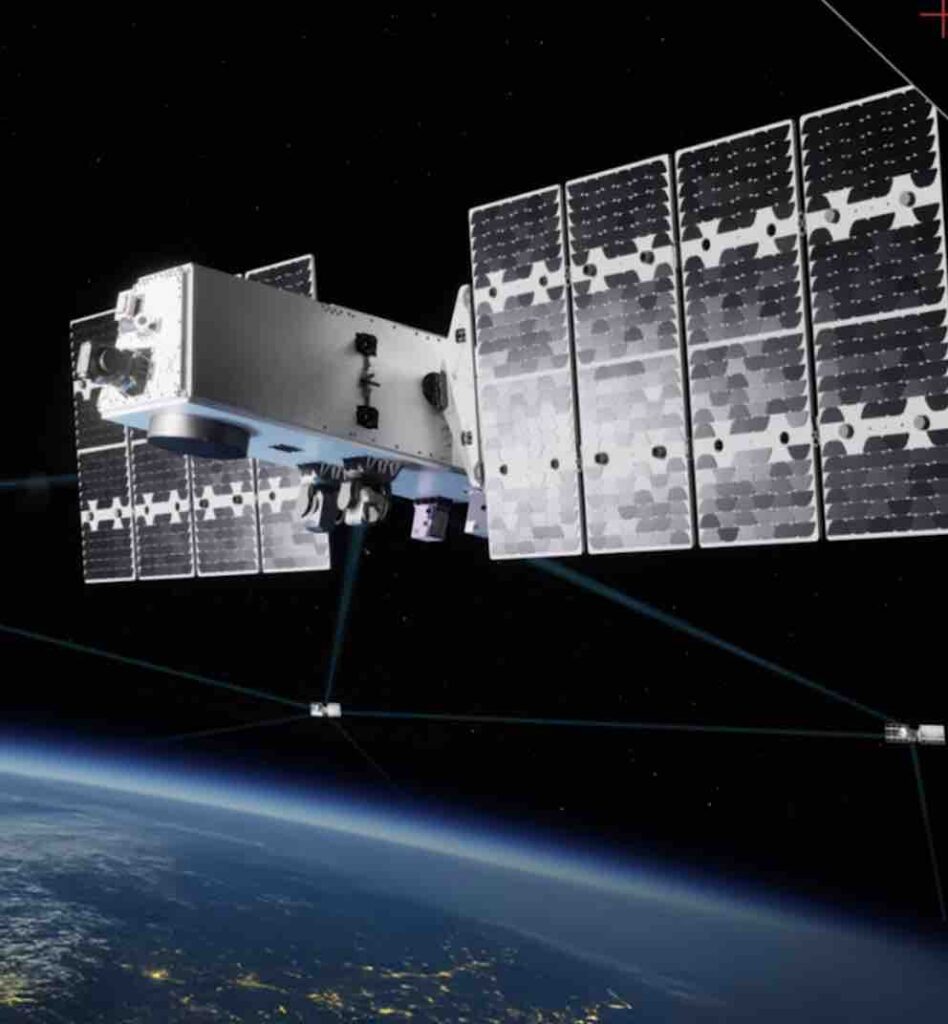
The acquisition of Motiv Space Systems strengthens this thesis. Motiv brings robotics and precision space mechanisms used in advanced missions, including technologies associated with Mars rover heritage. For Rocket Lab, this adds another layer to its long-term positioning: not just launch, but autonomous space operations, robotic systems, satellite hardware and potentially AI-supported in-space infrastructure. If space becomes more automated, companies that can build and operate the physical systems may become as important as the software companies analyzing the data.
Why Rocket Lab belongs on the defense & space AI watchlist:
- It combines launch, spacecraft manufacturing, satellite components and mission operations.
- It is increasingly exposed to national security and Space Force-related demand.
- The Motiv Space Systems acquisition adds robotics and in-space mechanism capabilities.
- Its role could expand from “rocket provider” to full space infrastructure company.
- The main risks are execution risk, launch cadence, margin pressure and competition from larger aerospace primes.
Worth watching: SpaceX – still private, but impossible to ignore
SpaceX is not publicly traded, so most retail investors cannot buy it directly on the stock market. Still, it is impossible to discuss defense, space infrastructure and AI without mentioning it. SpaceX already controls one of the most important launch ecosystems in the world, operates Starlink, works with U.S. defense customers through national security programs, and is now being linked more directly with large-scale AI infrastructure. Recent reports also indicate that xAI has been folded into SpaceX, which makes the company even more interesting as a potential future “space + AI + compute” giant.
The most important angle is orbital data centers. Reports say Google has been in talks with SpaceX about Project Suncatcher, while Anthropic has agreed to use SpaceX’s Colossus 1 compute capacity and expressed interest in exploring multiple gigawatts of orbital AI compute. If this direction develops, SpaceX could become more than a launch company – it could become a backbone provider for AI infrastructure beyond Earth. For now, this remains speculative, but IPO rumors and the scale of SpaceX’s ambitions are one reason the entire space AI sector is attracting more investor attention.
Why SpaceX is worth watching:
- It is still private, so it is not a direct public-market investment for most investors.
- It combines launch, satellites, Starlink, defense contracts and AI infrastructure ambitions.
- Its potential role in orbital data centers could change how investors value the space economy.
- The xAI connection adds another layer to the company’s long-term AI strategy.
- The main risk is that much of the orbital AI data center thesis is still early, expensive and technically unproven.
Pure-play space companies with strong AI foundations: data processing and satellites
These companies are closer to the “pure space” side of the market. They physically operate satellites, collect proprietary data from orbit, and then use software, AI and analytics to turn that data into useful intelligence. For investors searching for the best space AI companies to invest in, this category is especially interesting because the moat is not only the satellite hardware – it is the data archive, the frequency of collection, and the ability to extract insights faster than competitors.
The key idea is simple: satellites create the raw material, but AI creates the value. A satellite image alone is useful, but an automated alert showing troop movement, crop stress, flood damage, ship activity or infrastructure change is much more valuable. That is why companies like Planet Labs, BlackSky and Spire Global should be viewed not only as space companies, but as space-data intelligence platforms.
Planet Labs ($PL)
Planet Labs is one of the most important pure-play space data companies on the public market. The company operates a large Earth observation satellite fleet and is known for high-frequency imagery that helps governments, companies and researchers monitor changes on Earth. Its core advantage is not just taking pictures from space – it is the ability to build a constantly refreshed visual dataset of the planet and then apply AI to detect patterns, anomalies and changes over time. Planet describes its own model as delivering daily Earth data and insights at the pace of global change.
The AI angle is becoming increasingly important for Planet. The company announced a collaboration with NVIDIA to use the NVIDIA Jetson edge AI platform on its Pelican satellite mission, which is designed to support faster onboard processing and more rapid delivery of insights. Planet has also partnered with Anthropic to explore how Claude’s reasoning and pattern-recognition capabilities can be applied to complex geospatial imagery at scale. In addition, Planet has long used Google Cloud infrastructure for satellite imagery processing, which reinforces its position as a data-heavy platform rather than a simple imagery provider.
Why Planet Labs is worth watching:
- It owns one of the most valuable commercial Earth observation datasets.
- Its business model can evolve from selling imagery to selling AI-powered answers.
- Use cases include defense monitoring, climate analysis, agriculture, disaster response and infrastructure tracking.
- Partnerships with NVIDIA, Anthropic and Google Cloud strengthen the AI infrastructure thesis.
- The main risk is monetization: Planet has strong data assets, but investors still need to see whether AI can meaningfully accelerate revenue growth and margins.
BlackSky Technology ($BKSY)
BlackSky is a more defense- and intelligence-oriented space AI company. Its core product is real-time geospatial intelligence, combining satellite imagery, high-frequency monitoring and AI-enabled analytics through its BlackSky Spectra platform. The company positions Spectra as a system that allows customers to task satellites, monitor sites of interest and receive intelligence with speed and flexibility – especially in situations where timing matters.
This makes BlackSky especially relevant for government, military and national security customers. Its platform is built around the idea that users do not simply want images – they want alerts, context and operational intelligence. BlackSky has also highlighted AI-based change detection and broad-area search capabilities, including work connected with IARPA’s SMART program, where its tools analyzed years of satellite imagery and detected large numbers of change observations across monitored sites.
Why BlackSky is worth watching:
- It is closer to “real-time intelligence” than traditional satellite imaging.
- Its Spectra platform combines tasking, imagery and AI-enabled analytics in one workflow.
- It is well positioned for defense, intelligence, border security, crisis response and geopolitical monitoring.
- The company’s focus on speed could be a major advantage when customers need decisions in minutes, not days.
- The main risk is scale: BlackSky operates in a competitive market and must prove it can grow revenue while managing the high costs of satellite infrastructure.
Spire Global ($SPIR)
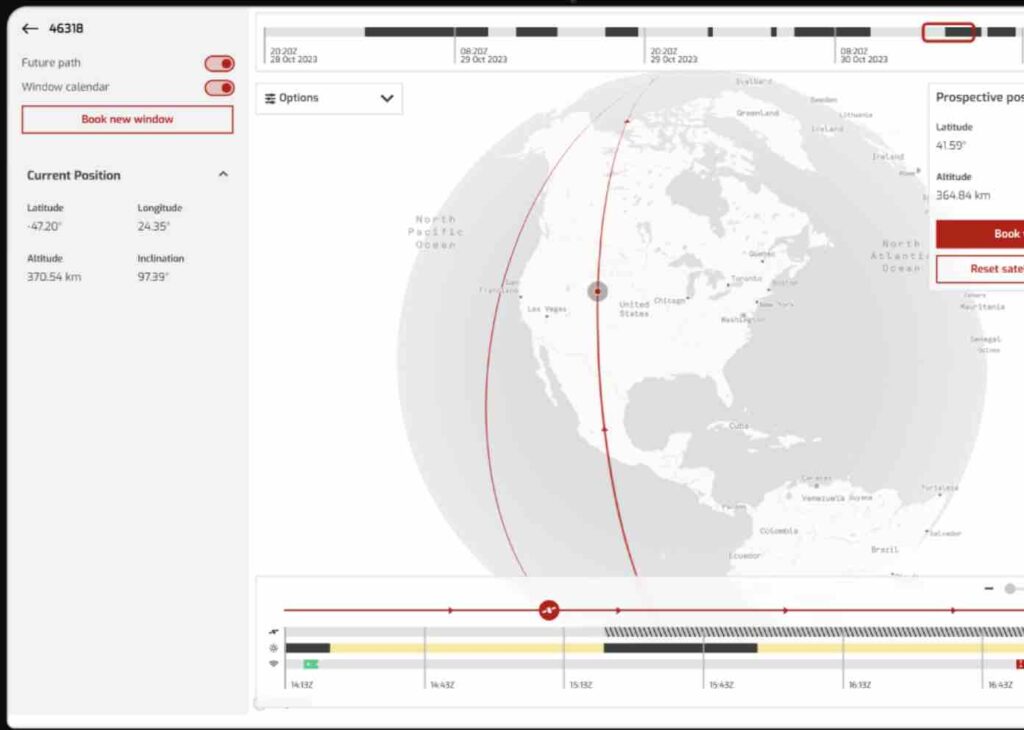
Spire Global is different from Planet and BlackSky because it is less focused on optical imagery and more focused on space-based data for weather, maritime, aviation and government use cases. The company operates its own satellite constellation and collects data that can be used for tracking ships, aircraft and atmospheric conditions. This gives Spire a strong position in markets where predictive analytics matter: weather forecasting, route optimization, climate risk, aviation operations and maritime decision-making.
The AI thesis for Spire is especially strong in weather and climate analytics. The company launched AI weather models called AI-WX and AI-S2S, built on NVIDIA Omniverse Blueprint for Earth-2, using Spire’s proprietary satellite data to generate medium-range and sub-seasonal forecasts. Spire also says its maritime weather products can feed AI models with long-term historical weather data and help businesses generate predictive insights.
Why Spire Global is worth watching:
- It owns valuable space-based datasets across weather, aviation, maritime and government markets.
- Its AI opportunity is tied to prediction, not just observation.
- Weather intelligence can serve large commercial sectors such as shipping, energy, insurance, aviation and commodities.
- Its satellite data can become more valuable as AI models need proprietary, real-world data inputs.
- The main risk is business execution: Spire has an attractive data thesis, but it must continue proving that its analytics products can generate durable, scalable revenue.
Together, Planet Labs, BlackSky and Spire Global represent three different versions of the same investment theme. Planet is the daily Earth observation and visual intelligence platform. BlackSky is the real-time defense and geopolitical intelligence platform. Spire is the space-powered weather, maritime and aviation data platform. All three show why the next phase of the space economy may be driven less by rockets alone and more by data, AI and decision-making infrastructure.
Conclusion: which space AI companies are worth watching?
The search for the best space AI companies to invest in is really a search for companies that sit at the intersection of three powerful trends: artificial intelligence, space infrastructure, and national security. This is no longer only about rockets. The most interesting opportunities may come from companies that collect satellite data, process it with AI, support defense systems, build autonomous spacecraft, or provide the computing infrastructure needed for the next generation of orbital technology.
For investors, the space AI market can be divided into a few clear categories. Big Tech companies like Nvidia and Alphabet offer exposure through AI infrastructure, chips, cloud computing, and long-term concepts such as space-based data centers. Defense-focused players like Palantir and Rocket Lab connect space systems with military intelligence, autonomy, and command-and-control platforms. Pure-play companies like Planet Labs, BlackSky, and Spire Global are closer to the core of the space data economy, using satellites and AI to transform raw orbital data into actionable insights.
So, what are the best space AI companies to invest in? The answer depends on risk tolerance. Nvidia and Alphabet may offer broader, more diversified exposure. Palantir and Rocket Lab are stronger plays on defense, autonomy, and national security. Planet Labs, BlackSky, and Spire Global provide more direct exposure to the future of AI-powered satellite data, but also come with higher execution risk.
The biggest opportunity is clear: as AI becomes more powerful, it will need better data, faster processing, and more autonomous infrastructure. Space can provide all three. If orbital data centers, real-time geospatial intelligence, autonomous satellites, and AI-powered Earth observation become mainstream, the companies building this ecosystem could become key winners of the next technological revolution.
Investors should still be careful. Many space companies are early-stage, volatile, and dependent on government contracts, capital spending, and long development timelines. But for those willing to take a long-term view, the best space AI companies to invest in may be the ones that do not simply reach space – they turn space into intelligence, infrastructure, and recurring value.
Sources: