
Drug factories in zero gravity may sound like science fiction, but for Redwire Corporation (RDW), this is already becoming a real business opportunity. The company is positioning itself at the intersection of space infrastructure, biotechnology and pharmaceutical manufacturing — a niche that could become one of the most important parts of the emerging space economy.
The core idea is simple but powerful: microgravity can change the way biological materials behave. In orbit, proteins, cells and crystals can form differently than they do on Earth, potentially opening the door to better drug development, more precise research and new manufacturing methods for therapies used in cancer, autoimmune diseases and other serious conditions. For investors, this is why the term “space drugs” has suddenly become much more than a futuristic slogan.
Redwire is not just a theoretical player in this field. The company already has space-tested hardware, operational experience on orbit and partnerships with major pharmaceutical and biotech players. That combination makes RDW one of the most interesting names to watch for anyone looking at the future of medicine beyond Earth — especially if microgravity manufacturing proves it can help create better, more effective treatments here on the ground.
Drug production in space with Redwire: meet PIL-BOX
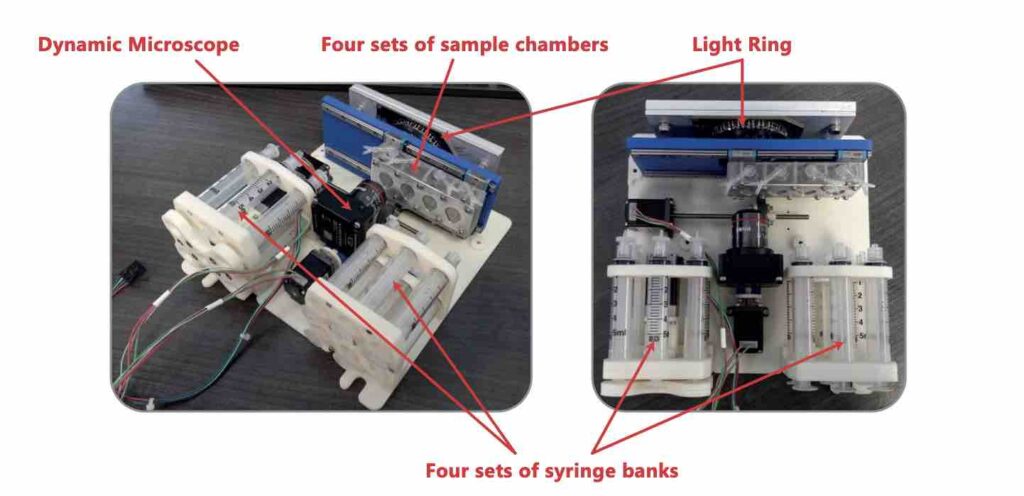
At the center of Redwire’s space-pharma story is PIL-BOX, short for Pharmaceutical In-space Laboratory – Bio-crystal Optimization eXperiment. In simple terms, it is a compact “lab-in-a-box” designed to run pharmaceutical crystallization experiments in microgravity.
Instead of building a giant orbital factory from day one, Redwire has taken a more practical route: create a small, repeatable and automated system that can be flown to the International Space Station, installed inside existing research infrastructure and used by pharmaceutical partners to test how drug-related molecules behave in space.
What makes PIL-BOX important?
- it is a compact, automated laboratory platform;
- it can mix chemical reagents in microgravity;
- it supports pharmaceutical crystallization experiments;
- it has already been tested in orbit;
- it gives pharma companies access to a unique research environment that cannot be fully replicated on Earth.
This matters because crystallization is a crucial part of drug development. The structure, purity, shape and stability of crystals can influence how a medicine is formulated, stored, manufactured and eventually delivered to patients. In microgravity, crystals may grow differently than they do on Earth because the environment reduces effects such as sedimentation and convection.
For pharmaceutical companies, this opens several potential opportunities:
- better understanding of complex molecules;
- improved crystal quality;
- new formulation possibilities;
- more precise structural research;
- potential support for therapies used in oncology, immunology, cardiovascular diseases or metabolic disorders.
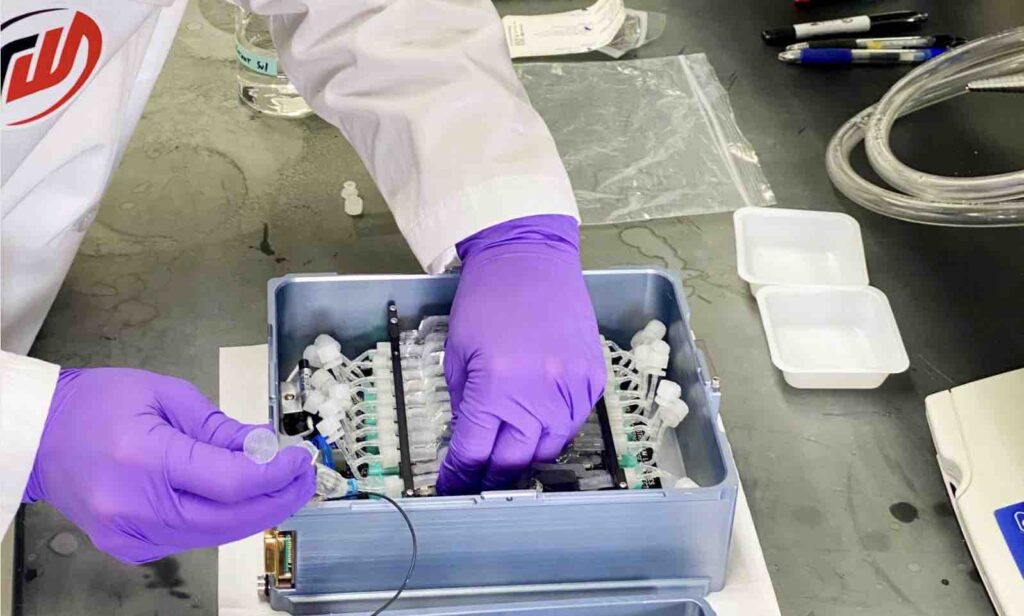
PIL-BOX is not just a one-off science experiment. It is a repeatable platform. Redwire has already flown multiple PIL-BOX units to the ISS and returned pharmaceutical crystal samples to Earth. The system has also been used in investigations with major industry names, including Eli Lilly and Bristol Myers Squibb.
That is important for investors because Redwire is not selling only a vision. The company already has:
- space-tested hardware;
- operational experience on the ISS;
- repeatable pharmaceutical research infrastructure;
- relationships with major pharma and biotech players;
- a position in a niche that could become much larger if microgravity drug research proves commercially valuable.
The cancer angle is especially interesting. Redwire has also announced work with Aspera Biomedicines, a company developing cancer stem cell targeted therapies, to conduct space-based research using PIL-BOX technology. This does not mean Redwire is becoming a traditional drug company. Its role is different: Redwire provides the orbital infrastructure, automation and microgravity platform that biotech and pharma companies can use to investigate molecules with potential medical applications.
In other words, PIL-BOX could become one of Redwire’s most valuable long-term assets because it connects three powerful markets:
- space infrastructure;
- pharmaceutical research;
- advanced biotech and disease treatment.
For now, PIL-BOX should not be seen as a full-scale orbital drug factory producing commercial medicines in bulk. That stage is still ahead. But it is already a working bridge between space research and real-world medicine. And that is exactly why the “space drugs” narrative around Redwire is so powerful: it connects the excitement of space with one of the largest and most important markets on Earth — healthcare.
Partnerships with pharma giants: Eli Lilly, Bristol Myers Squibb and Aspera
Redwire’s role in this market is not to invent new medicines on its own. The company is building the infrastructure that may help pharmaceutical companies improve the way drugs are researched, formulated and manufactured. That distinction is important. Redwire is not trying to become the next Eli Lilly. Instead, it wants to become the space-based technology partner for companies that already dominate global pharma.
The most important commercial validation so far has come from Eli Lilly and Company. Redwire’s first PIL-BOX mission launched with Lilly as a partner, with experiments focused on advanced treatments for diabetes, cardiovascular disease and pain. The company later continued this work, using microgravity to study how crystal growth could support drug discovery and formulation research.
For investors, this is a key point: Redwire is not simply pitching a futuristic idea. It has already placed pharmaceutical experiments in orbit, returned samples to Earth and shown that microgravity can produce different results than traditional Earth-based labs.
The Eli Lilly partnership is especially interesting because it touches some of the largest healthcare markets in the world:
- Diabetes — including insulin-related crystallization research;
- Obesity — one of the fastest-growing pharmaceutical categories;
- Cardiovascular disease — still one of the biggest global health challenges;
- Pain management — a field where better formulations could have significant commercial value.
The most eye-catching result came from insulin research. According to Redwire, insulin crystals grown in microgravity were larger and more ordered than crystals grown on Earth. That does not automatically mean a new drug is ready for market, but it does suggest that the space environment may help scientists better understand crystal formation, structure and stability.
Why does that matter? Because in pharmaceuticals, crystal quality can influence much more than laboratory data. It can affect:
- how well a molecule can be analyzed;
- how stable a formulation may become;
- how consistently a medicine can be produced;
- how easily researchers can optimize existing compounds;
- whether new versions of a drug could eventually be developed.
This is why Redwire’s technology could be valuable even if it never becomes a “drug company” in the traditional sense. The company does not need to own the final medicine. It can make money by providing the orbital tools, automation, mission integration and research infrastructure that pharma companies use to improve their own pipelines.
And Eli Lilly is not the only name in this story. Redwire has also supported partners such as Bristol Myers Squibb, ExesaLibero Pharma, Purdue University and Butler University through its PIL-BOX program. In 2026, Redwire also reported additional NASA funding for drug development investigations on the ISS and said that 43 PIL-BOX units had flown.
That growing partner list matters because it suggests PIL-BOX is not a single-customer experiment. It is becoming a broader platform.
From an investor perspective, the strongest part of the thesis is the mix of three signals:
- Big Pharma interest — Eli Lilly and Bristol Myers Squibb give the program credibility;
- NASA support — public funding helps validate the scientific and industrial importance of the platform;
- Repeatable hardware — dozens of PIL-BOX units flown means Redwire is building operational experience, not just prototypes.
The Aspera Biomedicines partnership adds another layer to the story: oncology. Redwire announced a contract with Aspera to conduct space-based research using PIL-BOX for work connected to cancer stem cell targeted therapies. Aspera is developing rebecsinib, an ADAR1 inhibitor, and the mission is intended to study crystal structures that could support new drug formulations and a wider group of ADAR1 inhibitors.
This is where the “space drugs” narrative becomes much more powerful. Diabetes, obesity and cardiovascular disease already represent massive commercial markets. But if microgravity research can also support oncology research, Redwire’s platform may become relevant to one of the most important and heavily funded areas of modern medicine.
Of course, this does not mean that Redwire has already solved cancer or created the next blockbuster drug. That would be an exaggeration. The more realistic view is this: Redwire is building a specialized infrastructure layer for pharmaceutical R&D in orbit. If the results continue to show that microgravity can produce better crystals, better structural data or better formulation pathways, pharma companies may have a real reason to keep sending experiments to space.
That is the investment case in one sentence: Redwire does not need to become Big Pharma — it only needs Big Pharma to decide that space-based research is worth paying for.
What comes next? 3D bioprinting human tissue in space
Redwire’s space-pharma story does not end with drug crystallization. The company is also moving into an even more ambitious area: 3D bioprinting human tissue in microgravity. This is where Redwire’s BioFabrication Facility, or BFF, becomes extremely important. BFF is a 3D bioprinter installed on the International Space Station, capable of printing human tissue using bioinks mixed with living cells. The facility is owned and operated by Redwire Space.
The idea sounds futuristic, but the logic is very practical. On Earth, gravity makes it difficult to print soft, delicate biological structures. Printed tissue can deform, collapse or lose its intended shape before it becomes strong enough to support itself. In microgravity, Redwire may be able to print more complex tissue structures with fewer of these limitations.
This opens the door to several potential use cases:
- printing human tissue samples for medical research;
- creating better models for testing drugs;
- developing tissue structures that are difficult to produce on Earth;
- supporting regenerative medicine research;
- reducing dependence on animal testing in early drug studies;
- eventually helping scientists move closer to lab-grown organs.
Redwire has already shown that this is more than a concept. The company successfully 3D bioprinted the first human knee meniscus in orbit using its upgraded BFF platform on the ISS. The print was part of the BFF-Meniscus-2 investigation, conducted with the Uniformed Services University of the Health Sciences Center for Biotechnology, also known as 4D Bio3.
That milestone matters because the meniscus is not just a simple piece of tissue. It is a complex structure that plays an important role in the knee, helping absorb shock and stabilize movement. If tissue like this can be printed, matured and analyzed after returning to Earth, it could become an important step toward more advanced regenerative medicine.
For Redwire, BFF expands the investment thesis beyond “space drugs.” The company is not only helping pharma companies test molecules in orbit. It is also building infrastructure that could support the next generation of biomedical research.
In practice, BFF could help researchers answer questions such as:
- How do living cells organize themselves in microgravity?
- Can space help scientists grow more realistic tissue models?
- Could drug testing become more accurate if performed on human-like tissue samples?
- Can orbital bioprinting support future therapies for injuries or degenerative diseases?
- Could microgravity eventually help create complex organs or organ-like structures?
This is where the long-term potential becomes especially interesting. Today, many drugs are tested using simplified lab models or animal studies before reaching human trials. But animals do not perfectly replicate human biology. If Redwire’s technology enables researchers to print more accurate human tissue models in space, it could eventually help pharmaceutical companies test treatments in a more precise way.
That does not mean Redwire is close to printing full human organs for transplant. That would be far too optimistic at this stage. But the company is building real capabilities in a market that could become much larger over time: space-based biomedical manufacturing.
From an investor perspective, the key point is simple: Redwire is creating a platform, not just a product. PIL-BOX supports pharmaceutical crystallization. BFF supports tissue engineering and regenerative medicine. Together, these technologies give Redwire exposure to several powerful markets at once:
- drug development;
- cancer research;
- diabetes and obesity treatment research;
- regenerative medicine;
- tissue engineering;
- future organ and drug-testing platforms.
This is why Redwire’s medical-space segment is so compelling. The company is not betting on one single experiment. It is building an ecosystem of orbital research tools that could become increasingly valuable if pharmaceutical and biotech companies decide that microgravity gives them an edge.
In other words, PIL-BOX may be the beginning of the story — but BFF shows how much bigger the opportunity could become. Redwire is trying to turn the ISS into something more than a research outpost. It is trying to turn orbit into a new kind of biomedical laboratory.
How the business model works: seed crystals, not mass production in orbit
One of the most common questions investors ask is simple: if launching cargo to space is so expensive, how could drug manufacturing in orbit ever become commercially viable? After all, producing millions of pills, injections or vials on the International Space Station would not make economic sense today.
Redwire’s answer is much smarter than full-scale orbital manufacturing. The company is not trying to produce entire commercial batches of drugs in space. Instead, the goal is to use microgravity to create extremely high-quality seed crystals.
In practice, this means that PIL-BOX does not need to manufacture tons of pharmaceutical material. It only needs to produce a small amount of highly ordered, high-purity crystals in orbit. Once these “space-grown” seed crystals return to Earth, pharmaceutical companies can study them, use them as a structural reference, and potentially replicate the improved crystal form in traditional Earth-based manufacturing facilities.
This model changes the economics completely.
Instead of sending massive production lines to orbit, Redwire can focus on:
- producing small but valuable crystal samples;
- helping pharma companies discover better crystal forms;
- returning those samples to Earth for analysis;
- supporting future drug formulation and manufacturing optimization;
- making space useful as an R&D and seed-crystal platform, not a full factory.
That is why the “space drugs” thesis should not be understood as millions of tablets floating around the ISS. The more realistic opportunity is this: space can become a premium research environment where pharma companies create the blueprint for better drugs, while mass production still happens on Earth.
Investor takeaway: Redwire as “Space Lab as a Service”
For investors, this is where the Redwire story becomes especially interesting. RDW is no longer viewed only as a company that builds solar arrays, space structures and satellite components — although those areas still represent the core revenue-generating business. Increasingly, Redwire is also positioning itself as an infrastructure provider for the next phase of commercial space: Space Lab as a Service.
In this model, Redwire does not need to own the final drug, run clinical trials or compete directly with Big Pharma. Its role is to provide the orbital laboratory tools that pharmaceutical and biotech companies need to run experiments in microgravity.
That gives Redwire exposure to several powerful trends at once:
- commercial use of the ISS and future space stations;
- pharma R&D outsourcing;
- microgravity-based drug discovery;
- regenerative medicine and tissue engineering;
- cancer, diabetes, obesity and cardiovascular research;
- the growing need for better drug formulation platforms.
The investment thesis is not risk-free. Microgravity drug manufacturing is still early, and it will take time to prove that these experiments can lead to commercially meaningful pharmaceutical products. But Redwire already has something many space companies only promise: working hardware, orbital experience, repeatable missions and partnerships with serious pharma players.
The key point is simple: Redwire does not need to manufacture the medicine itself. It only needs Big Pharma to decide that space-based research is valuable enough to pay for.
If that happens, RDW could become one of the most important infrastructure companies in the “space drugs” economy — not because it owns the drugs, but because it owns the tools that may help improve them.